


ANIMATED EXPLAINER · 1 MIN 28 S
How a reclining workstation takes the load off
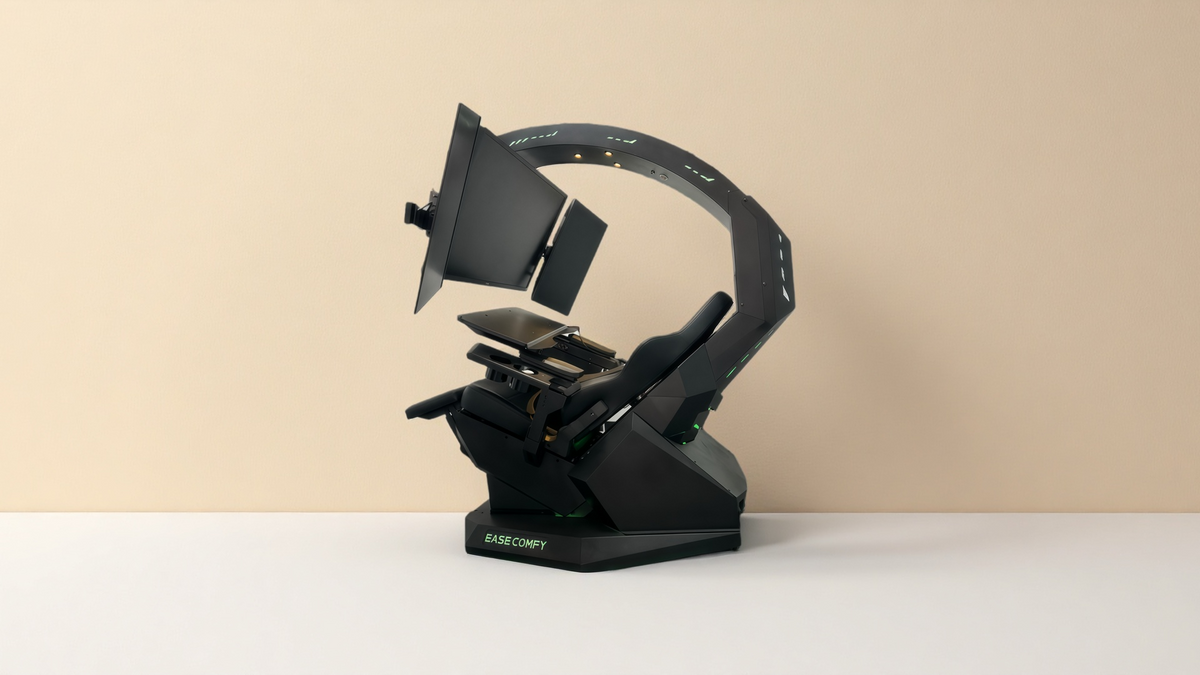
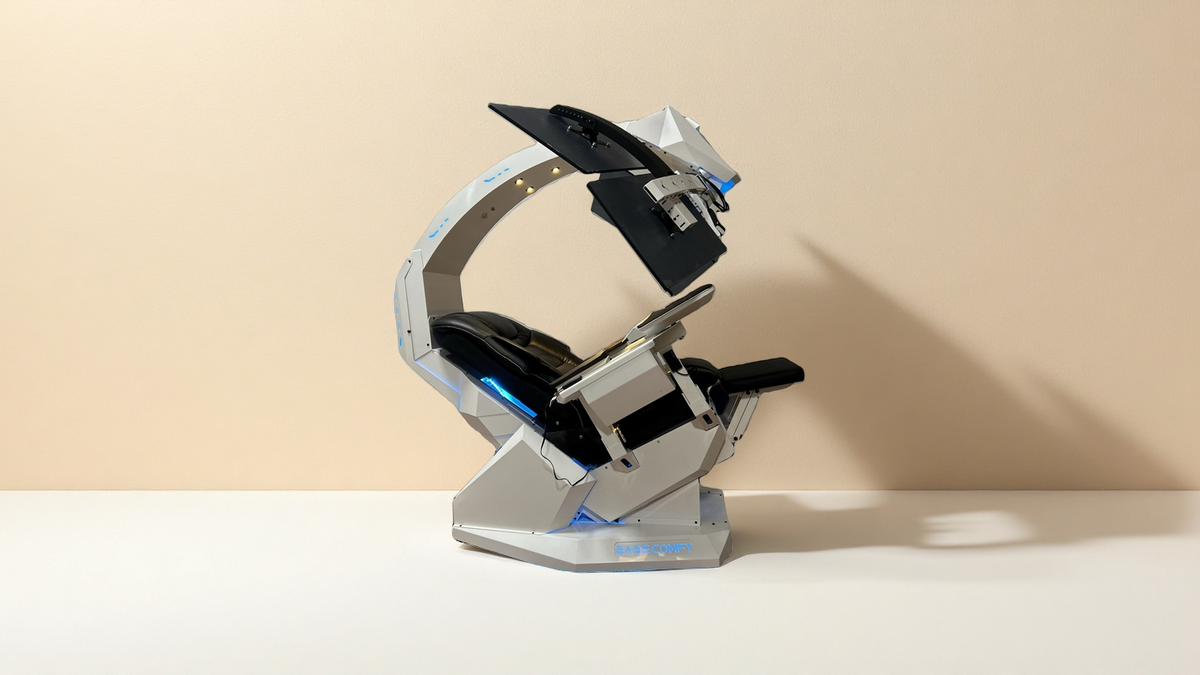
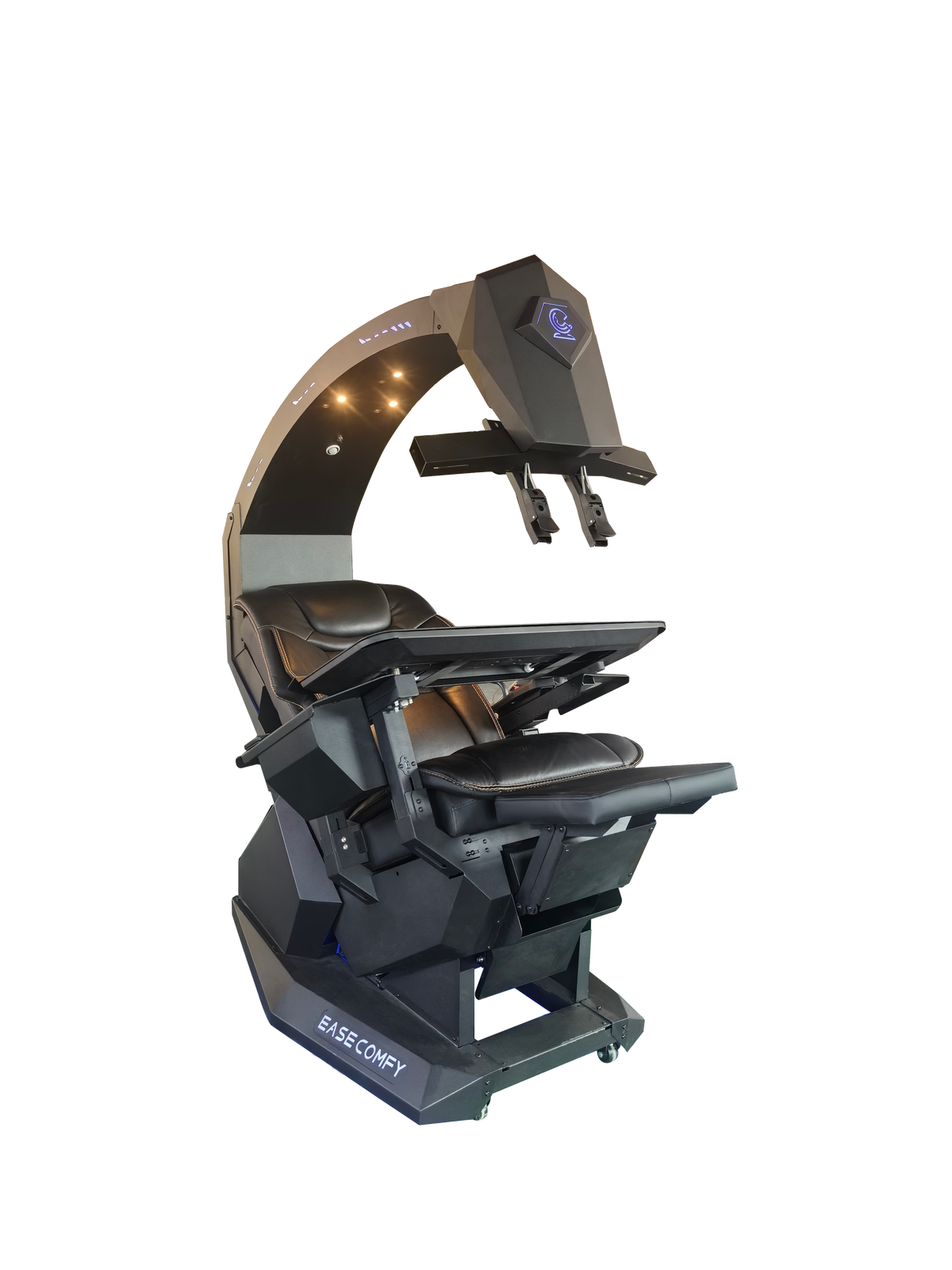
Reclining changes two things: where body weight rests, and how far each part of the body sits below the heart. The animation covers five body regions and states how strong the evidence is for each.
Where does reclining take the load off?
Side-view sketch. Each part names its evidence here.
Sitting upright at a desk, nearly all the upper-body weight lands on the pelvis.
Data and evidence
Reclining does move pressure off the sit bones and perineum, and it does shorten the height between the pelvis or feet and the heart. Both points rest on mechanical and physiological data. There is no direct clinical evidence that it prevents or treats haemorrhoids. The safe claim is that it reduces pressure during long sitting. Treating haemorrhoids takes other measures.
01Sit bones and perineum
In wheelchair studies, tilting the whole seat back 45° lowered interface pressure at the sit bones by about 33–45%. A 45° tilt combined with a 120° backrest recline lowered peak pressure by up to about 40%.
These were measured on wheelchair seats, in people with spinal cord injury and in able-bodied volunteers, away from any office setting. A tilt of about 20° lowered pressure by only about 11%, so small angles do little. No study shows that lower seat pressure reduces haemorrhoids.
02Pelvic veins
The vertical drop from the heart to the pelvic floor is drawn as 40 cm, falling to 20 cm when the trunk reclines to 30° above horizontal. Hydrostatic pressure equals ρgh, about 7.8 mmHg for every 10 cm of blood.
This is a physical estimate with no clinical trial behind it. One case-control study (81 cases, 162 controls) found higher odds of haemorrhoids or anal fissure in people sitting 5 or more hours a day (odds ratio 3.68). Other researchers note that, apart from long toilet sitting, general sitting has not been linked to haemorrhoids.
03Lumbar discs
Measured pressure inside the L4–L5 disc: 0.83 MPa sitting bent forward, 0.50 standing relaxed, 0.46 sitting without a backrest, 0.27 leaning back relaxed, 0.10 lying flat. In an upright-MRI study, discs shifted least at a 135° trunk-to-thigh angle.
The pressure data come from one healthy 45-year-old man, and the authors say they cannot be extended to people with back problems. The MRI result is a 2006 conference presentation on 22 volunteers with no history of back pain.
04Neck
With the head upright, the load on the cervical spine is about 4.5–5.5 kg. It rises to about 12 kg at 15° of forward tilt, 18 kg at 30°, 22 kg at 45° and 27 kg at 60°.
These figures come from a computer model and were not measured in people. No measurement shows how much of the load a headrest takes when reclined.
05Leg veins
Venous pressure at the ankle: about 7 mmHg lying flat, 75–83 mmHg standing still, 51 mmHg sitting and 22 mmHg after ten steps of walking.
Nobody has measured the value in a reclining workstation. The animation places it by the height difference. Raised legs do not replace movement.
Also worth knowing
- A search found no clinical study testing whether this kind of reclining workstation prevents or treats haemorrhoids.
- The US NIDDK lists these causes of haemorrhoids: straining on the toilet, sitting on the toilet for long periods, chronic constipation or diarrhoea, a low-fibre diet, ageing, pregnancy and frequent heavy lifting. Prevention means more fibre, enough fluids, no straining and short toilet visits.
- See a doctor for rectal bleeding, or for symptoms that persist after a week of home care. Severe anal pain with bleeding needs prompt care.
- The Heart Foundation in Australia advises a break from sitting every 30 minutes. Lying still in a recliner counts as sedentary time too.
- The name zero gravity comes from the relaxed posture NASA recorded in weightlessness, with hips and knees gently bent. Later NASA work found a range of postures and no single standard angle.
Sources
- Wilke et al., New in vivo measurements of pressures in the intervertebral disc in daily life, Spine 1999
- Bashir et al., positional MRI study of sitting posture, RSNA annual meeting 2006
- Hansraj, Assessment of stresses in the cervical spine caused by posture and position of the head, Surg Technol Int 2014
- Jan et al., wheelchair tilt and recline and skin perfusion over the ischial tuberosity, 2010
- Seat-pressure redistribution in variable-position wheelchairs, 2010
- Stick et al., Venous pressure in the saphenous vein near the ankle during changes in posture and exercise, Eur J Appl Physiol 1993
- Taylor & Francis ergonomics chapter: ankle venous pressure standing, sitting and walking
- Lohsiriwat, Hemorrhoids: from basic pathophysiology to clinical management, World J Gastroenterol 2012
- Shallaly et al., Is prolonged sitting a risk factor in developing hemorrhoids and anal fissures?, Sudan J Med Sci 2023
- The Conversation, Scrolling on the toilet increases your risk of haemorrhoids, 2025
- NIDDK, Hemorrhoids
- Heart Foundation (Australia), Sit less, move more
- NASA Spinoff, neutral body posture